
Terse
Daniel Burley, Jessie Evans,
Carlotta Roma, Sophie Spedding,
Jim Shaw, Will Vetch
Curated by Carlotta Roma and Will Vetch
8 November 2025 - 10 January 2026

Imagine a painter flexing their muscles as they lift turgid subjects, utilitarian objects that carry as much weight as a reclining nude.
Beyond a short and laconic tendency, we define terseness as a positioning: an anti-conformist and anti-hierarchical aesthetic. In works marked by this terseness, lines and solid blocks of colour collide and compete, as if in verbal bouts – chucking out apertures, objects and weird figuration. Terseness is a force that cuts through an image, opening up “a place where form, feeling and fuckup churn together in a dynamic of irresolvable problems, fertilized by our collective shit.”*
In painting, terseness can assert itself in all manner of ways. Terseness does not privilege the physical and gestural (the body), over the calculated and conceptual (the mind), but is the consciously ‘off-centre’ sensibility that emerges when the two come together. It is about risk-taking, unashamedly so. And it isn’t afraid of dealing with complicated subjects, making mis-steps and mistakes, testing and trying, again and again.
Terseness is concerned with an enigmatic kind of painting – not the fantastical kind, which tries to create vivid illusions of reality through representation. Enigmatic painting instead centres the psychological. Mark-making becomes a language: a non-verbal interference with the image constructed. When paintings are crosscut by this terse language, we see figures, objects and landscapes suffuse the surface, forming plump, churned up compositions that are both rich in matter and deprived of hierarchy.
Imagine a painter flexing their muscles as they lift turgid subjects, utilitarian objects that carry as much weight as a reclining nude. Through terseness, their painting can transgress upon the canvas with an anarchic lust for palpable feeling. Mixing humour and poignancy, terseness is both release and new entanglement. It cleaves through complexity just as it winds us inside sticky new forms of puzzlement.
* Sillman, A. (2020) ‘Bless This Mess’, in Faux Pas: Selected Writings and Drawings, edited by Charlotte Houette, Francois Lancien-Guilberteau & Benjamin Thorel, New York: After 8 Books, pp. 51

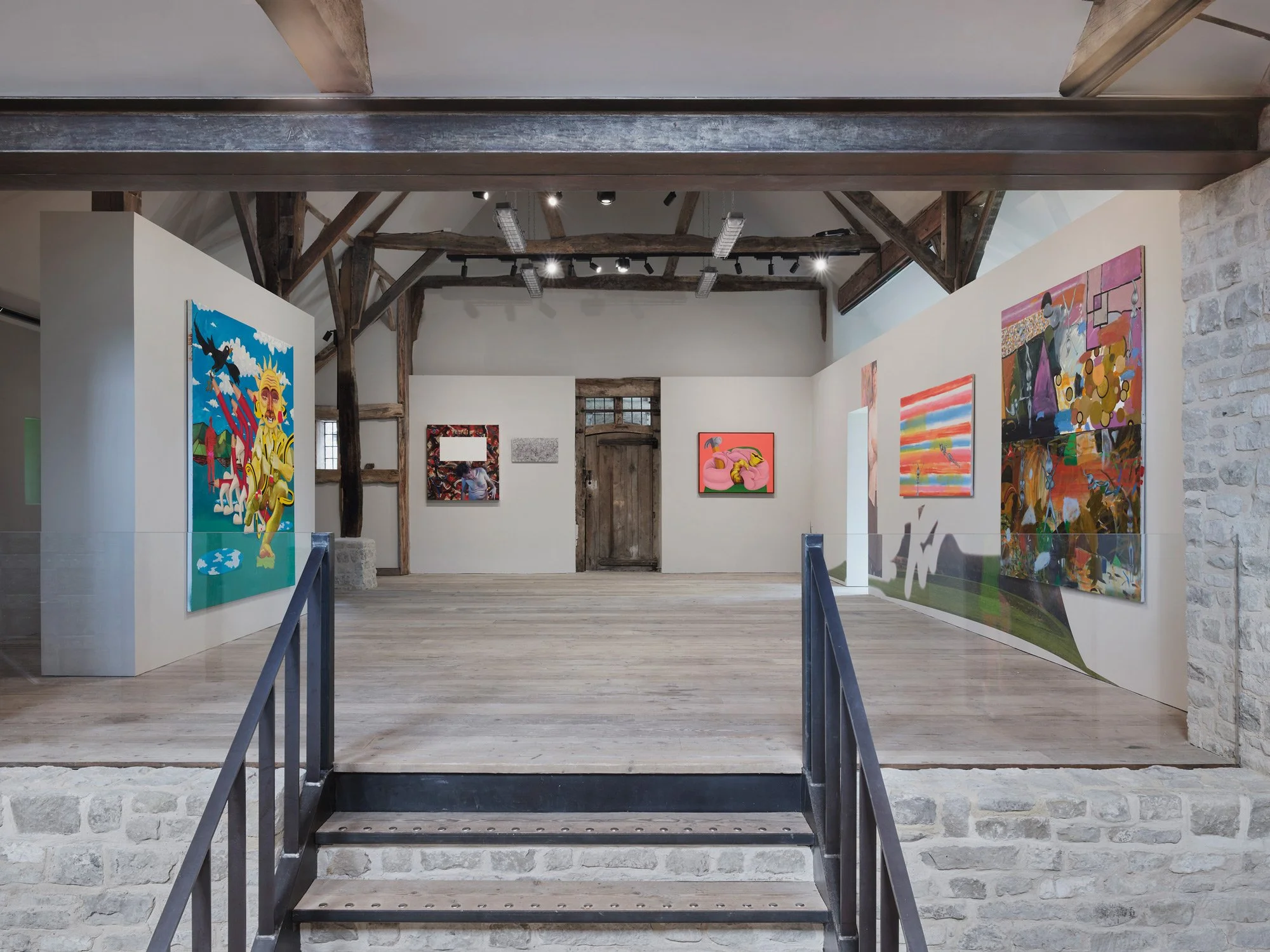
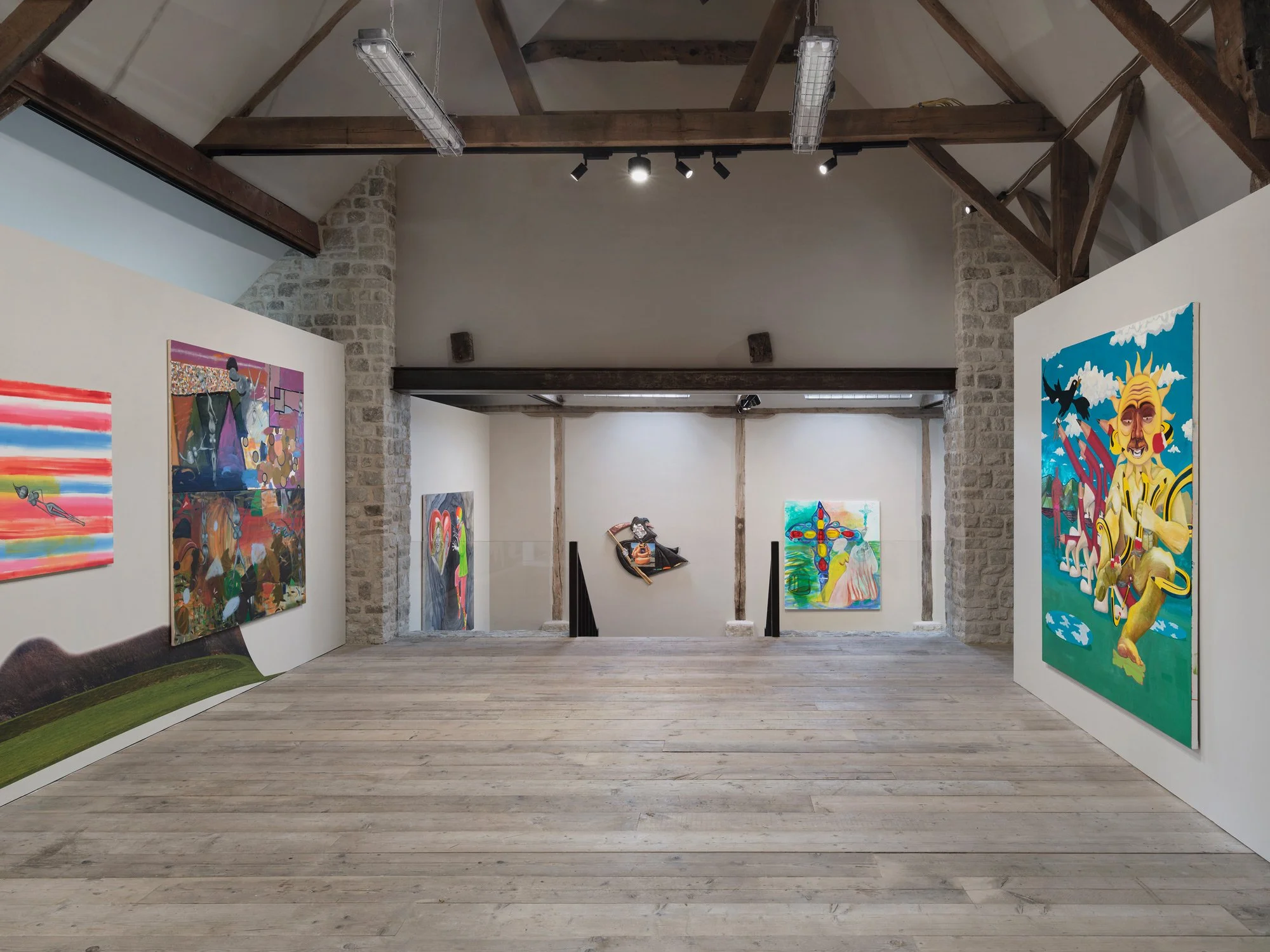

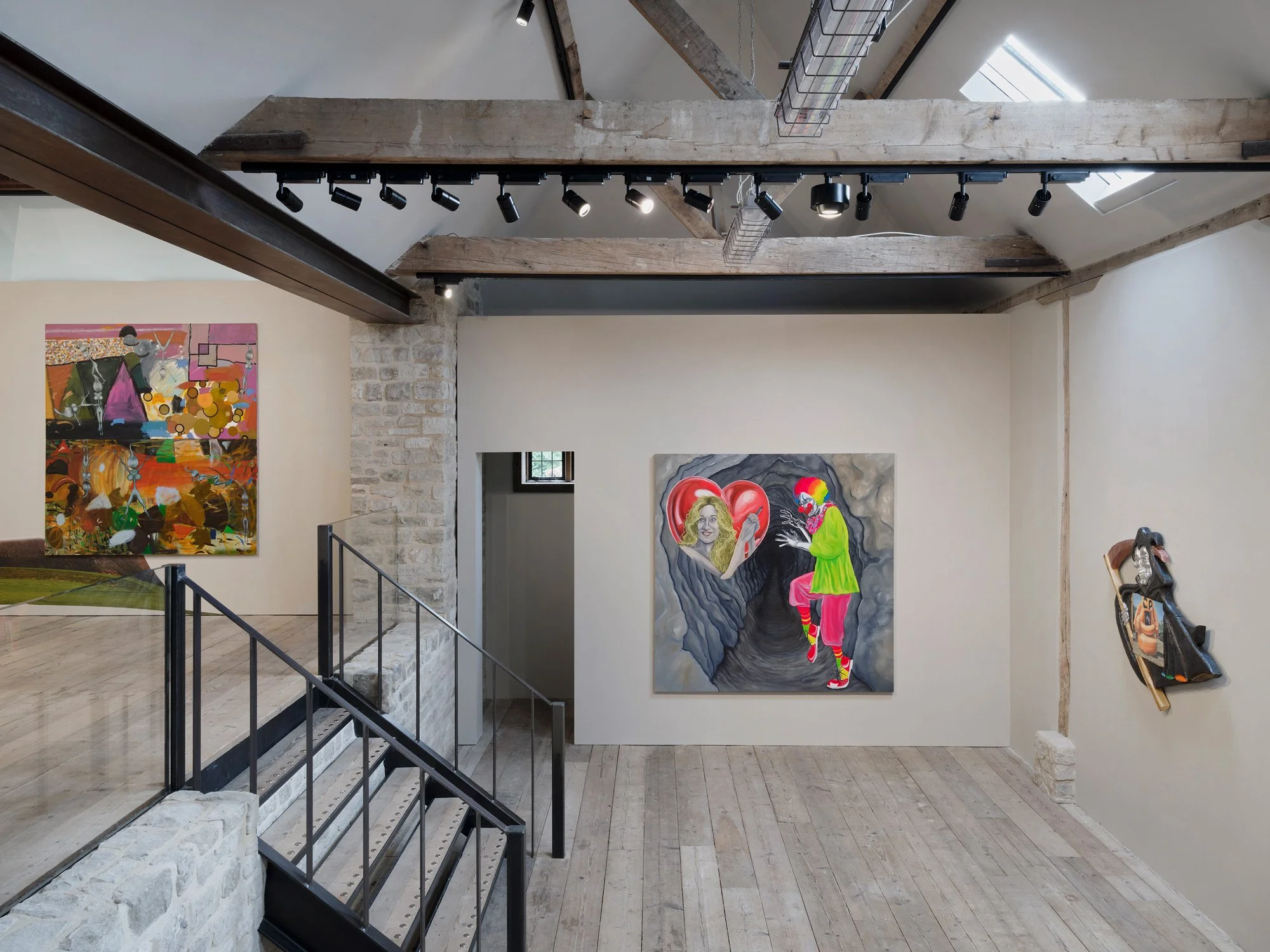
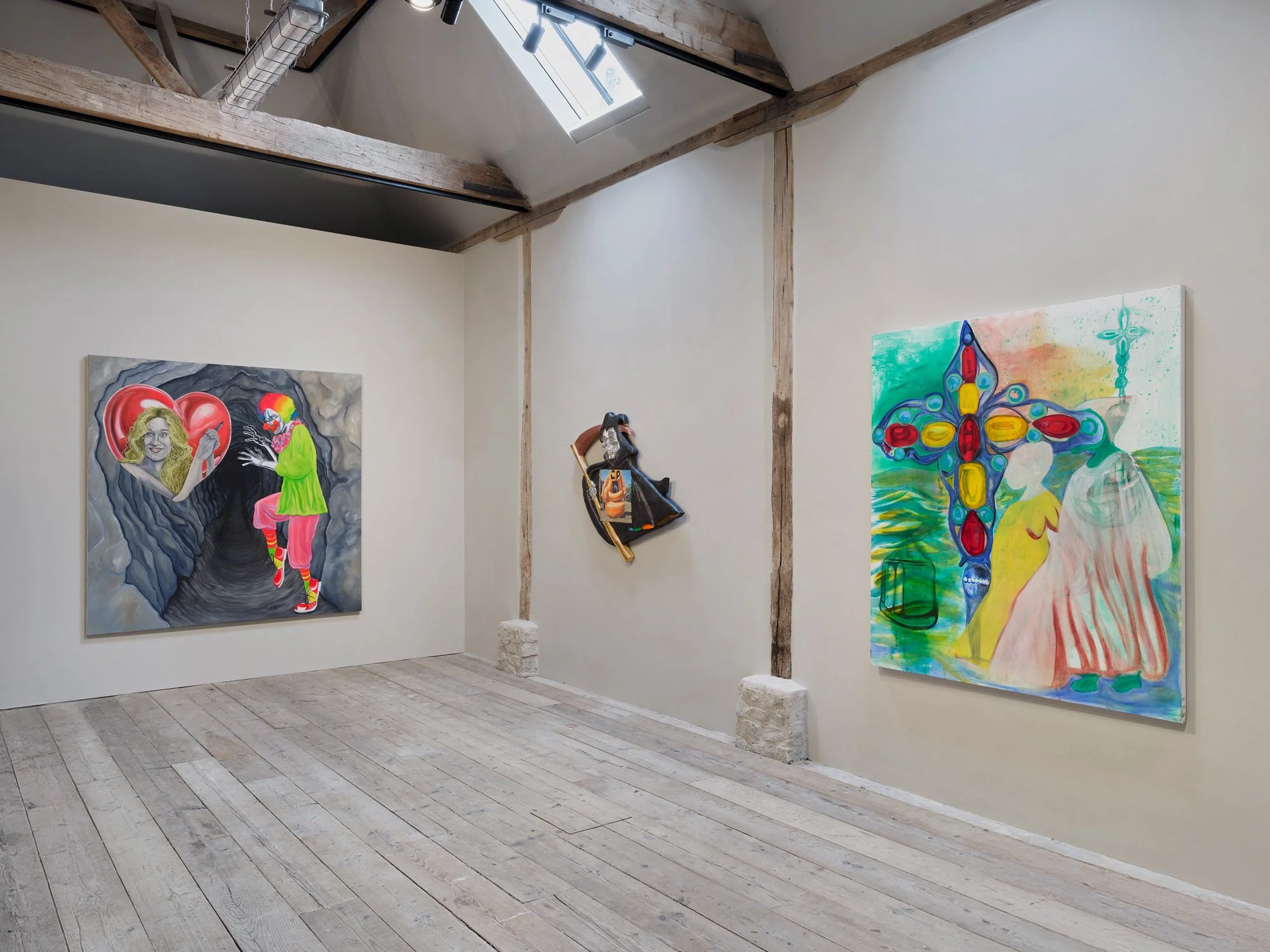
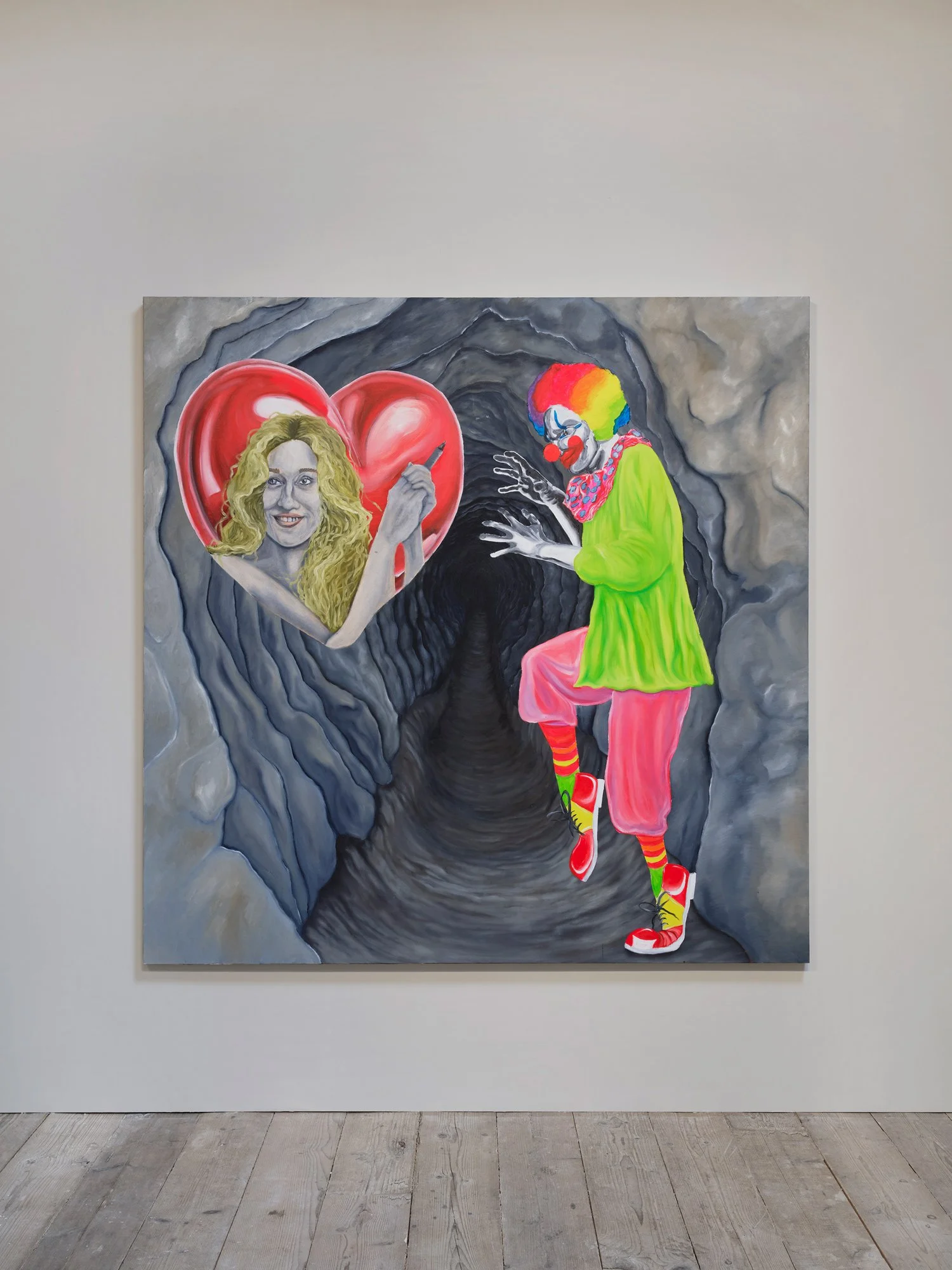
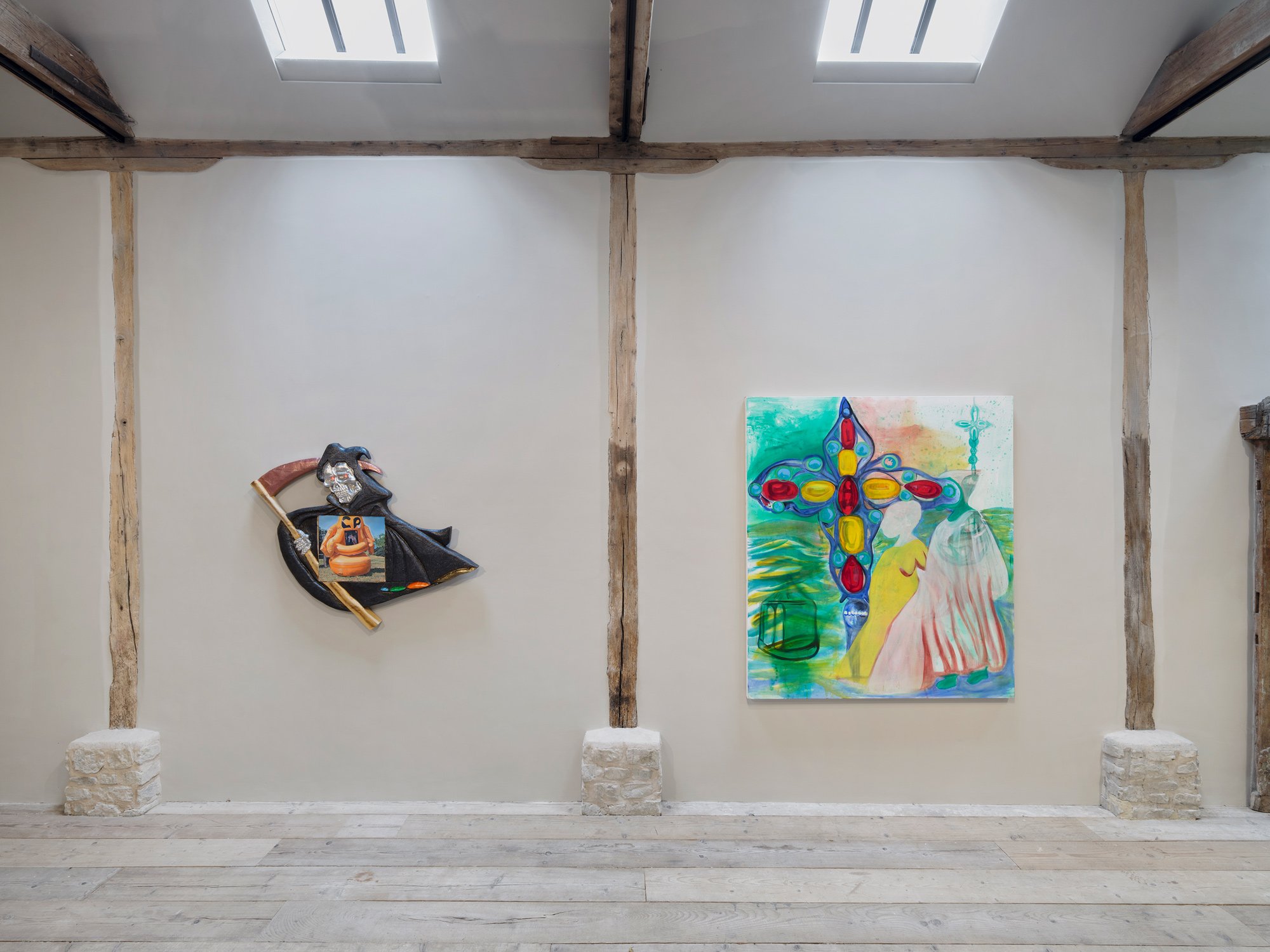
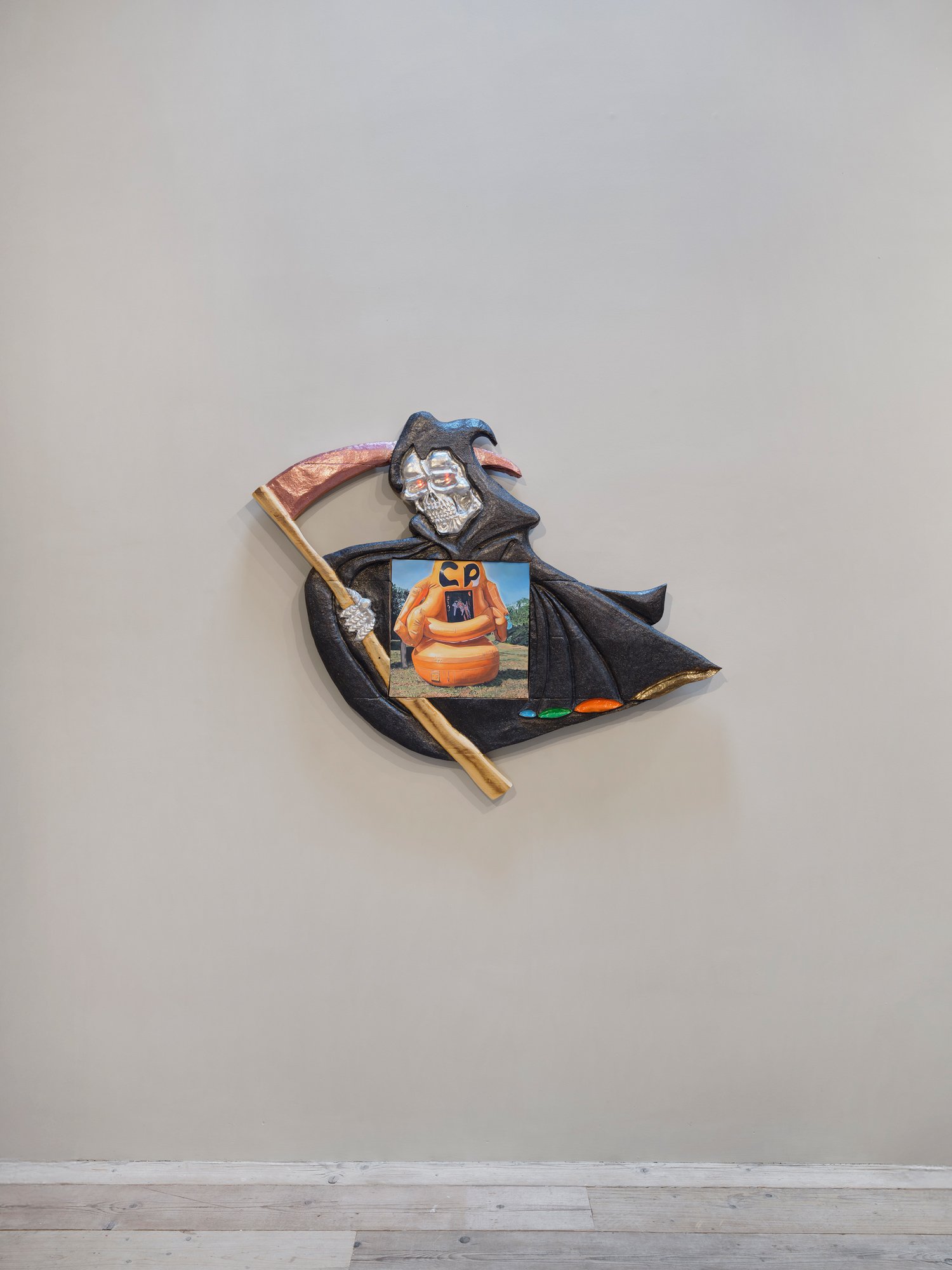

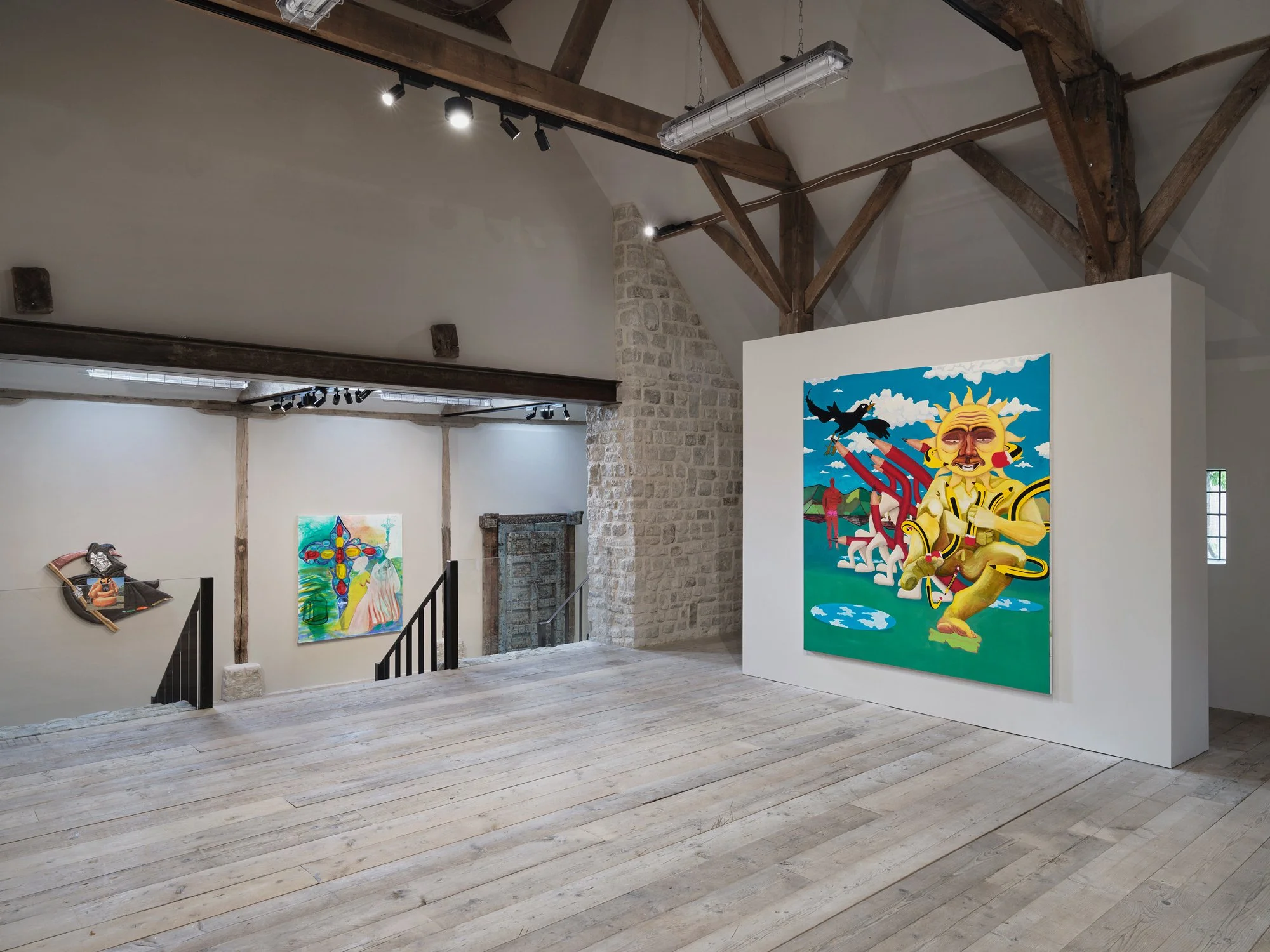
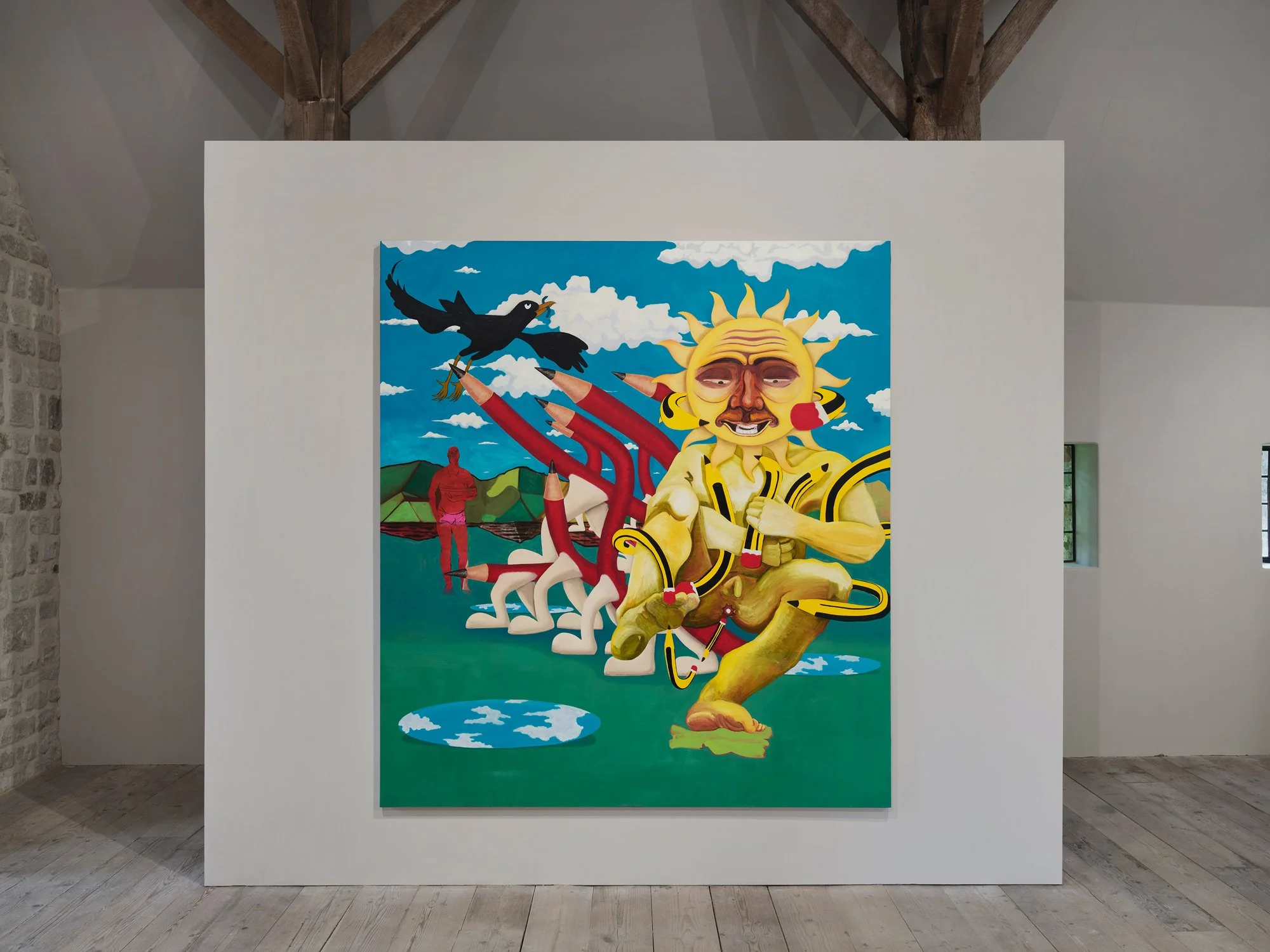
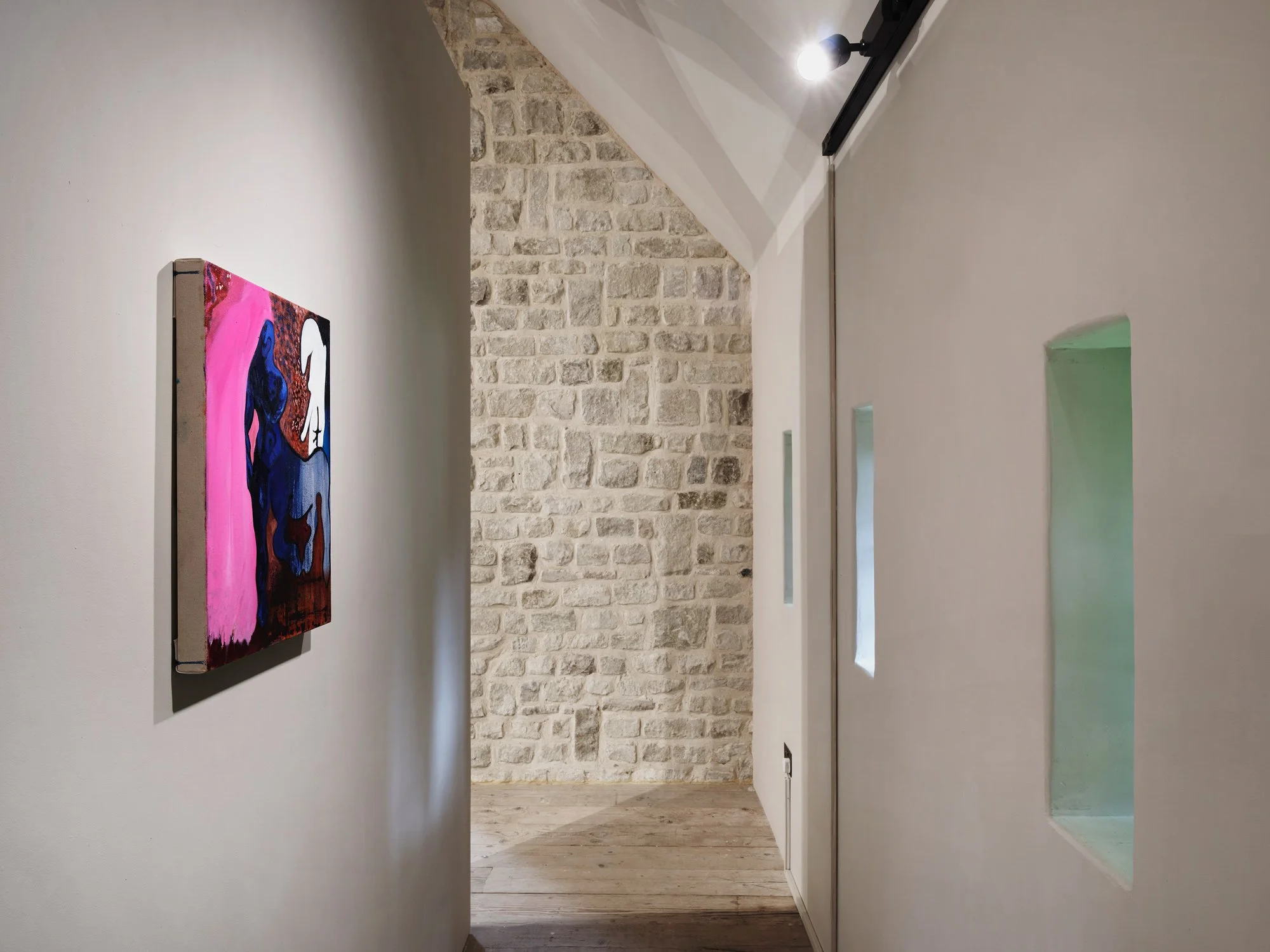
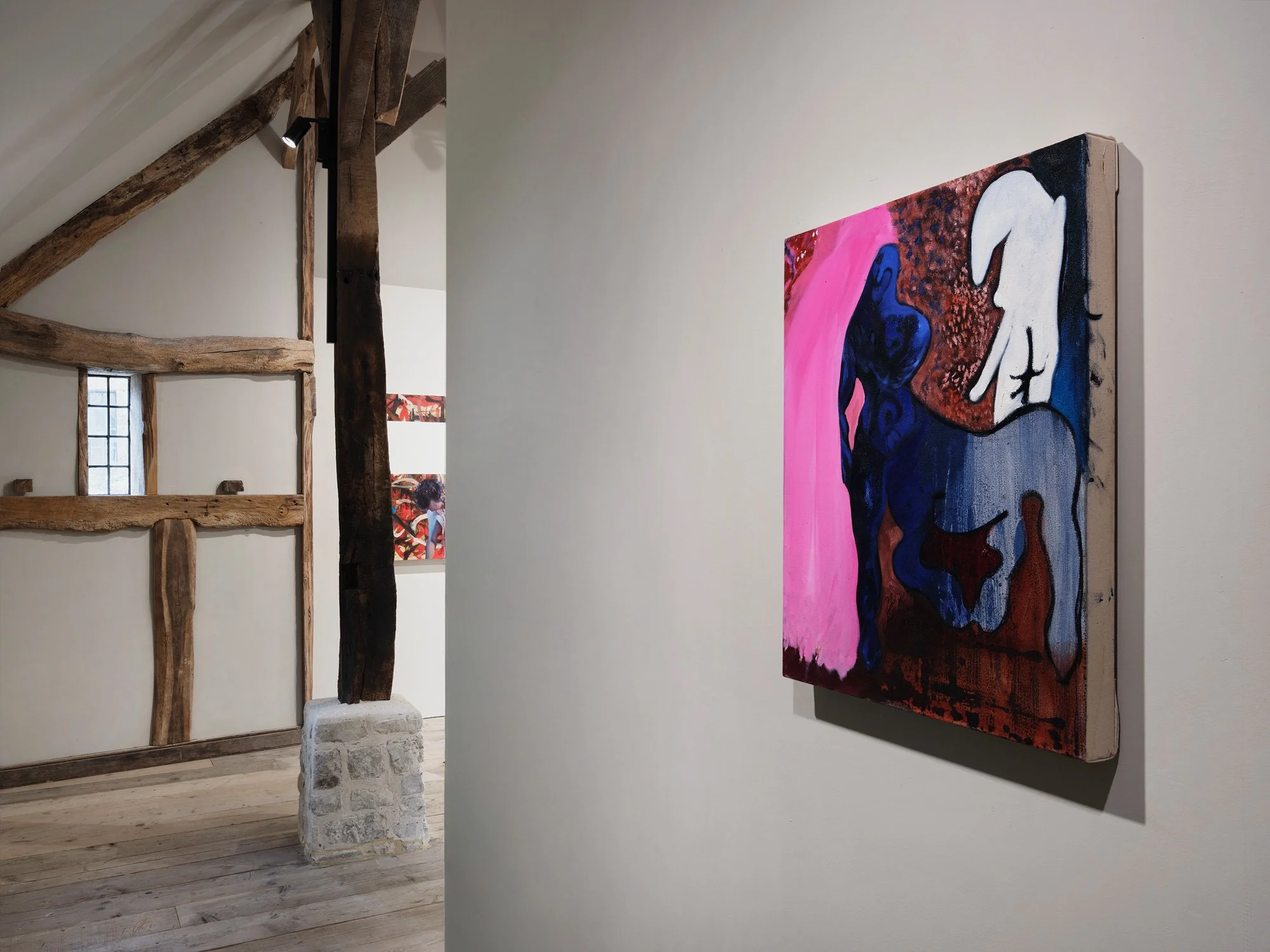
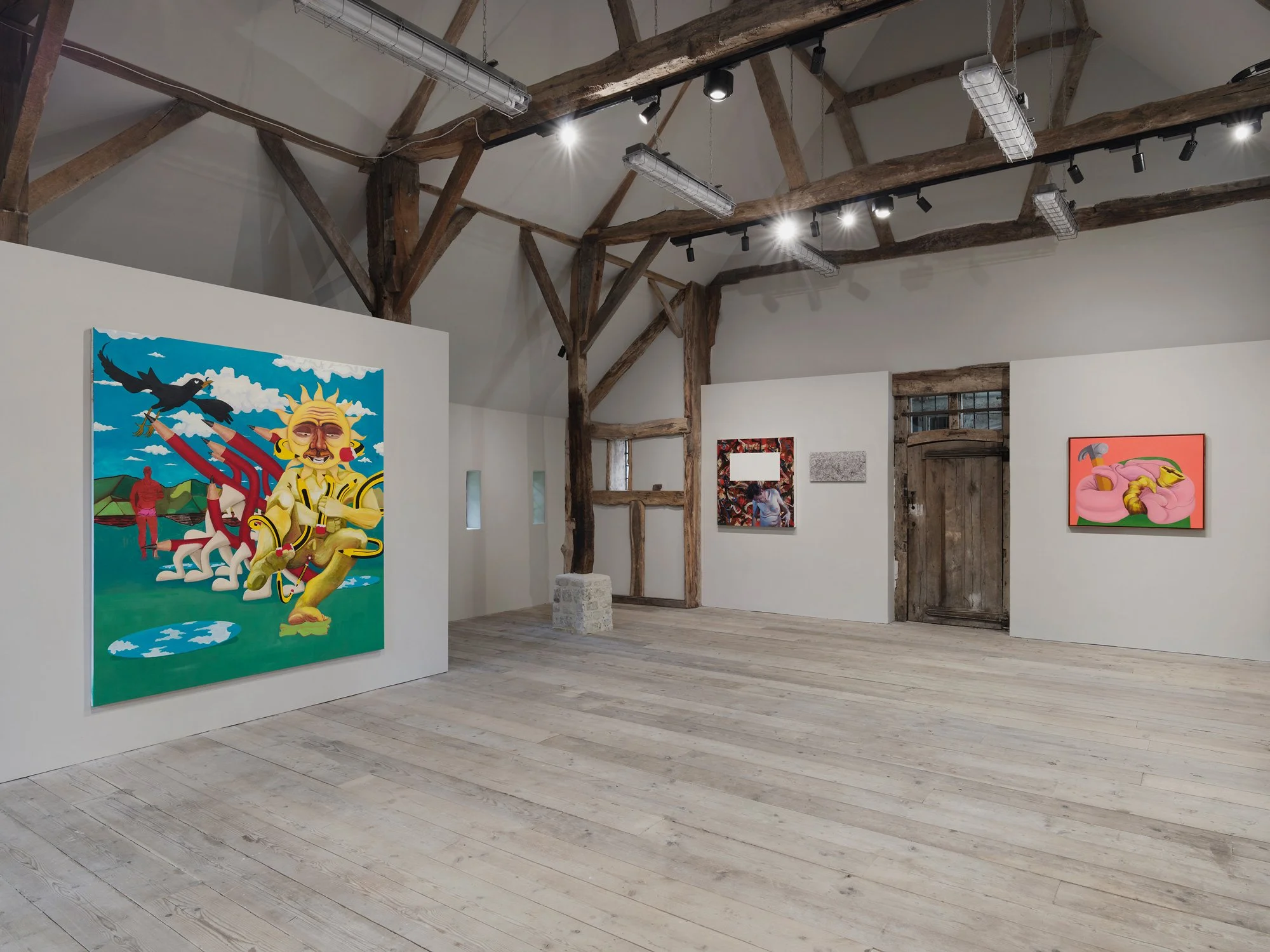
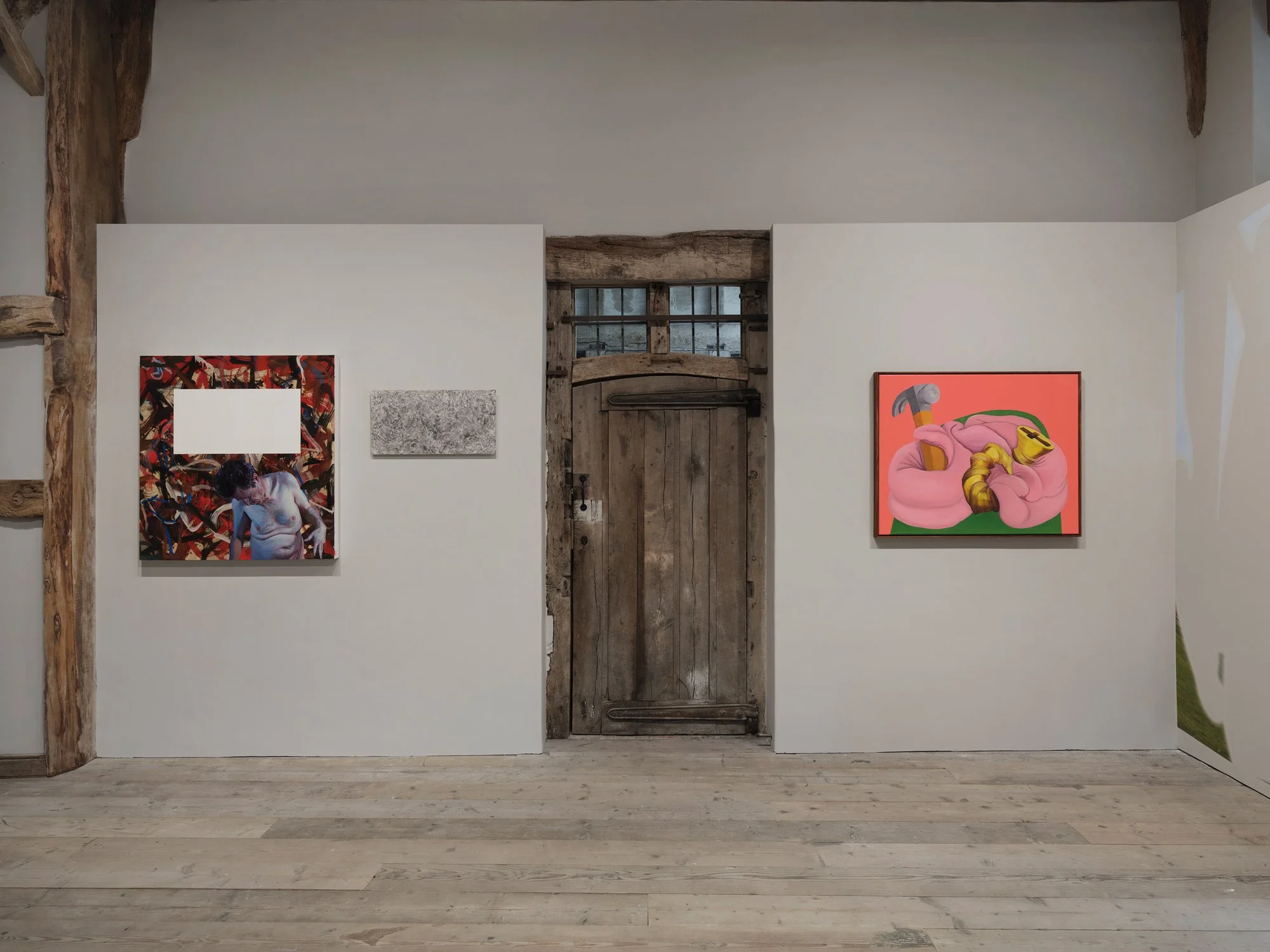


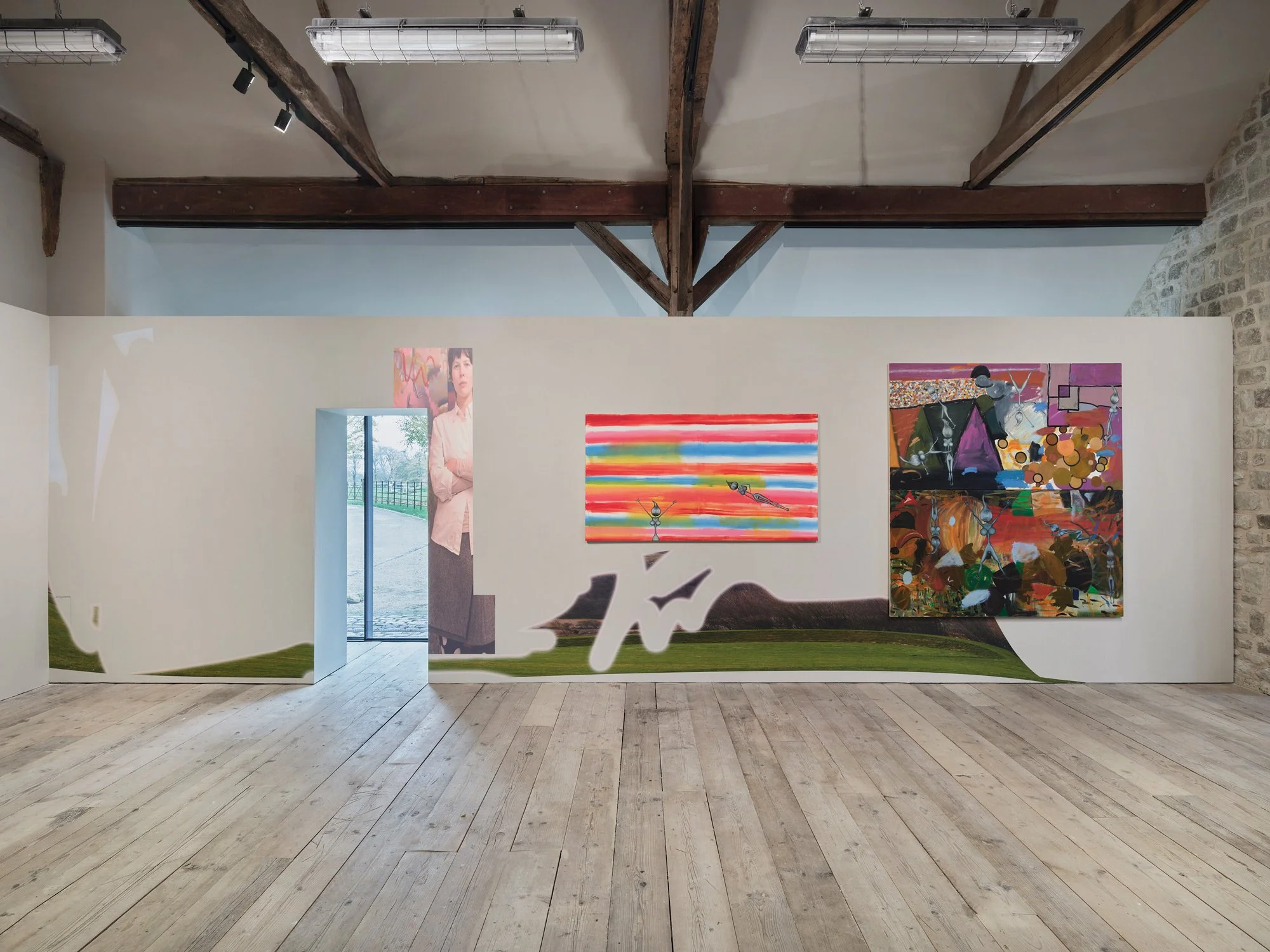
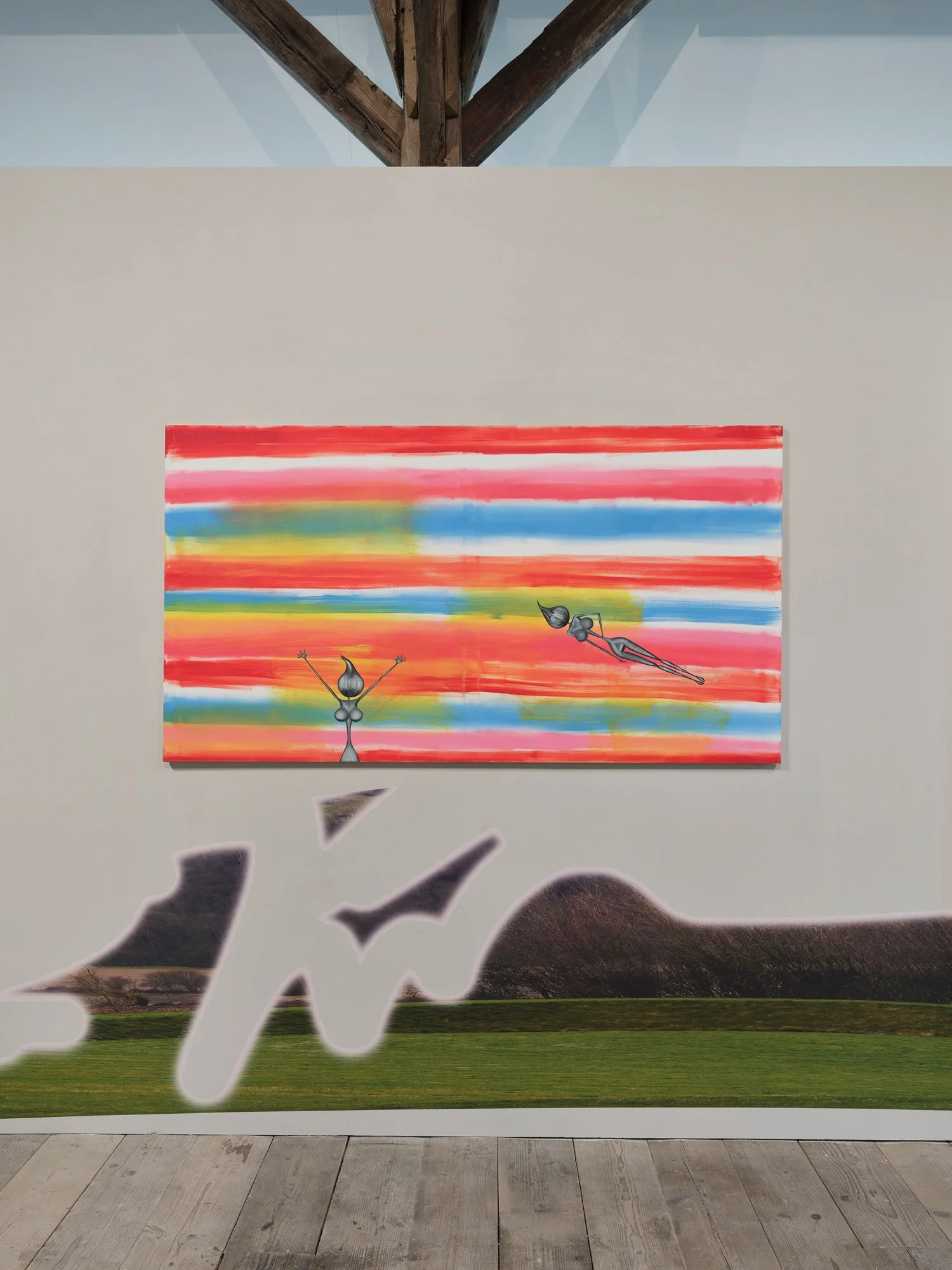
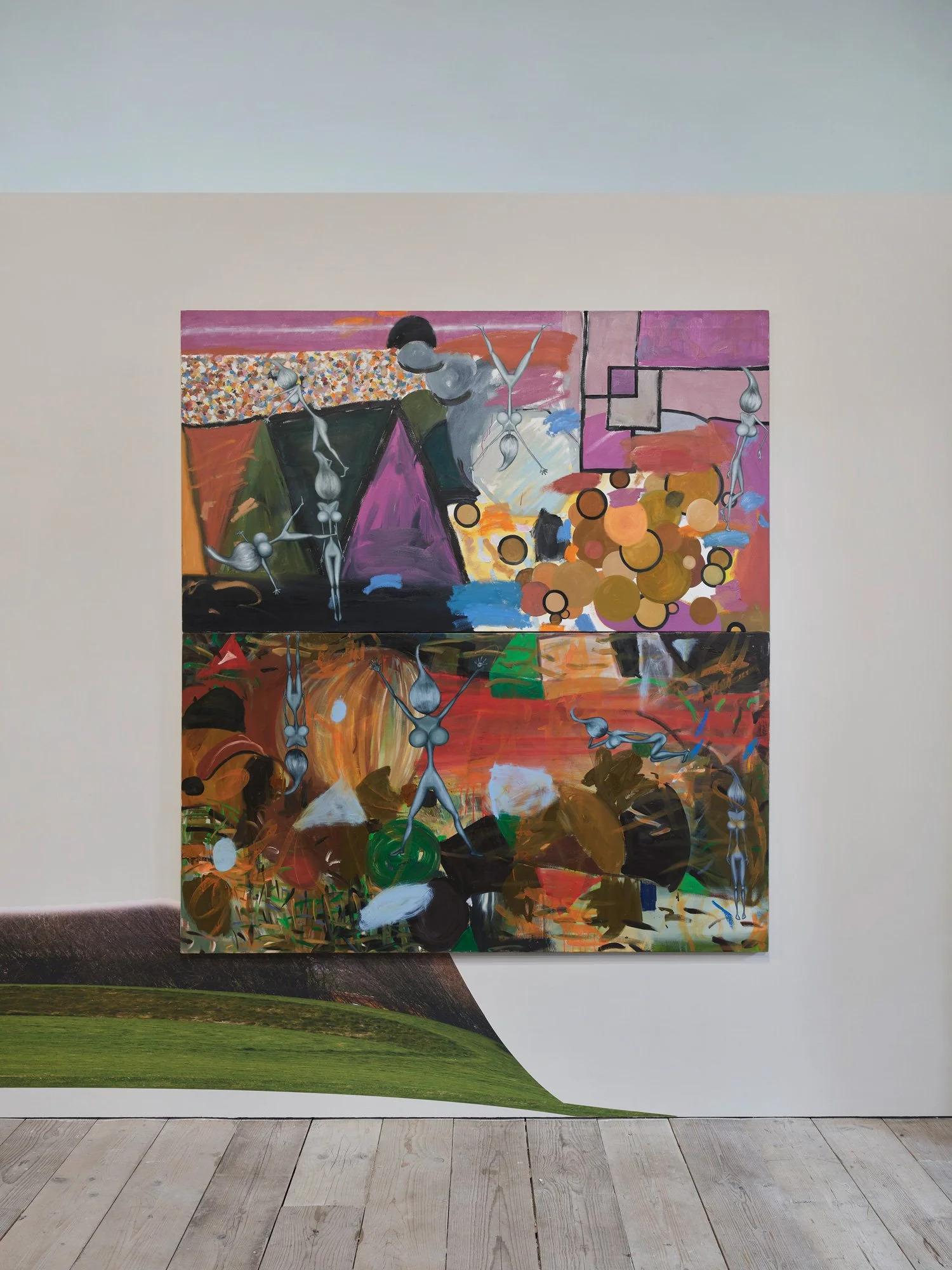

Terse: Daniel Burley, Jessie Evans, Carlotta Roma, Jim Shaw, Sophie Spedding, Will Vetch, curated by Carlotta Roma and Will Vetch,
Inspection Pit, West Sussex, UK, 2025.
Photo: Ben Westoby / Fine Art Documentation